
Case Study:
Two Facilities. One Automation Standard.
Zero Surprises.
How early floor testing and planned remediation helped MSC Industrial Supply prepare two existing distribution facilities for AutoStore automation.
2 Facilities
in Two States
4 - 6 Weeks
Project Timeline
Up to 40 MM
Floor Deviation
ON-TIME
Automation Go-Live
The Project
MSC Industrial Supply was preparing two existing distribution facilities—one in Jonestown, PA, and another in Elkhart, IN—for the installation of AutoStore warehouse automation systems.
The investment was an important part of MSC’s strategy to maximize cubic storage capacity and reduce labor-intensive material handling processes. With the two installations scheduled only weeks apart, both facilities needed to be ready on time.
MSC, a long-time Durable Surfaces customer, knew that the automation systems required significantly tighter floor tolerances than traditional warehouse operations. As a result, MSC brought Durable into the project early to evaluate the existing slabs, identify compliance gaps, and complete the remediation required before installation.
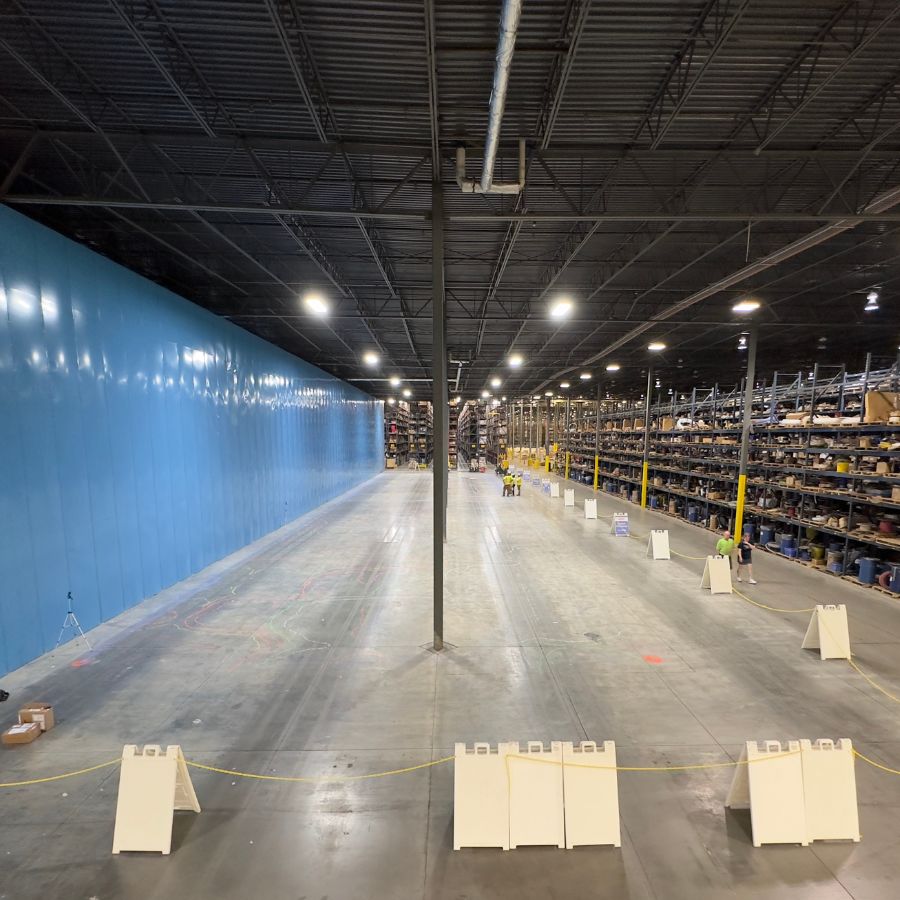
The Challenge: Aging Floors Meet Modern Automation
Both AutoStore systems were being installed in older, existing facilities where the concrete slabs had never been designed for the tolerances required by modern warehouse automation.
Testing revealed significant elevation variations at both locations.
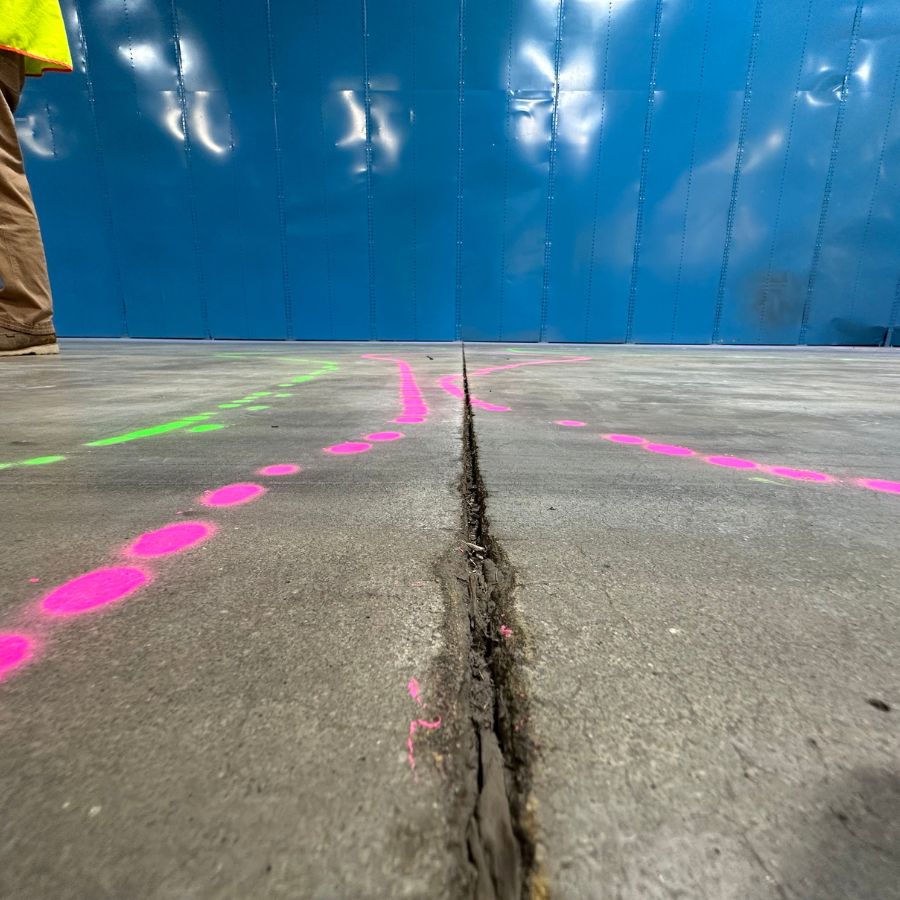
At Jonestown, portions of the approximately 10,000-square-foot automation footprint were as much as 40 millimeters outside the required tolerance. Much of the variation was concentrated along slab joints, where curling had created pronounced high areas.
Elkhart presented a different problem. Floor deviations exceeded 20 millimeters, including an area where intersecting slabs differed in elevation by approximately 14 millimeters—directly within the planned AutoStore footprint.
Left uncorrected, these conditions could have prevented the automation systems from operating as designed. In the worst case, MSC could have faced system binding, installation delays or even the need to dismantle and reinstall portions of the system after discovering the problem.
Because MSC evaluated the floors early, however, remediation could be treated as part of the project plan rather than an emergency.
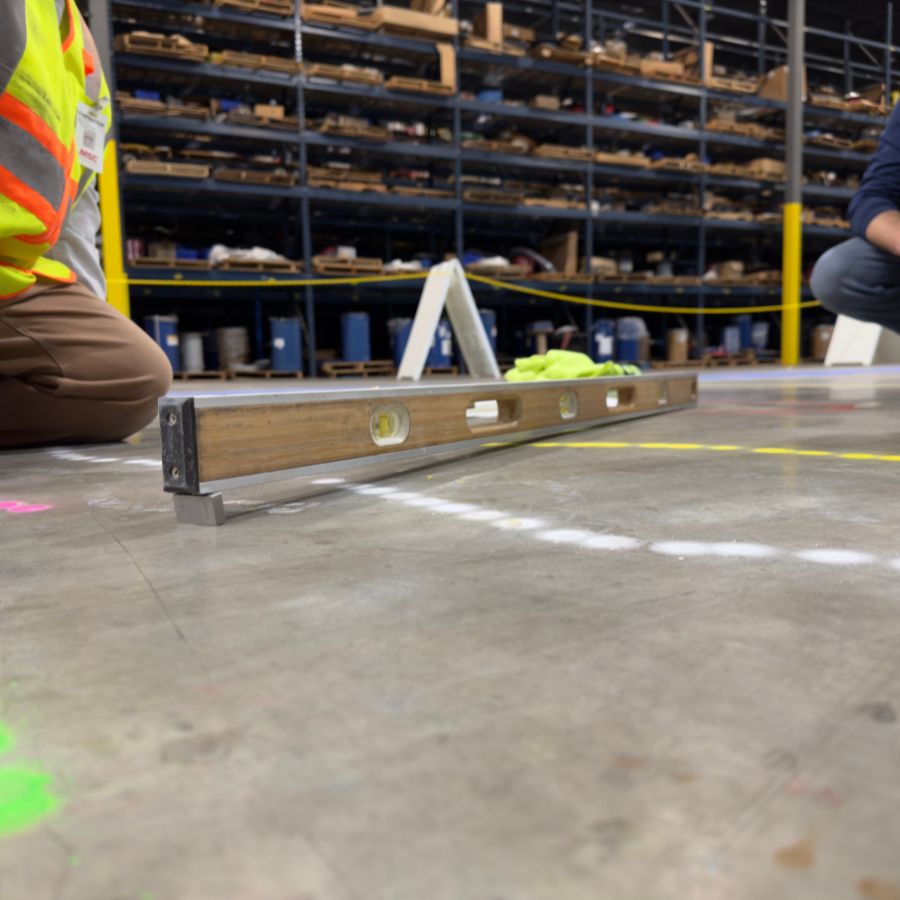
Testing Turned an Invisible Problem into a Clear Plan
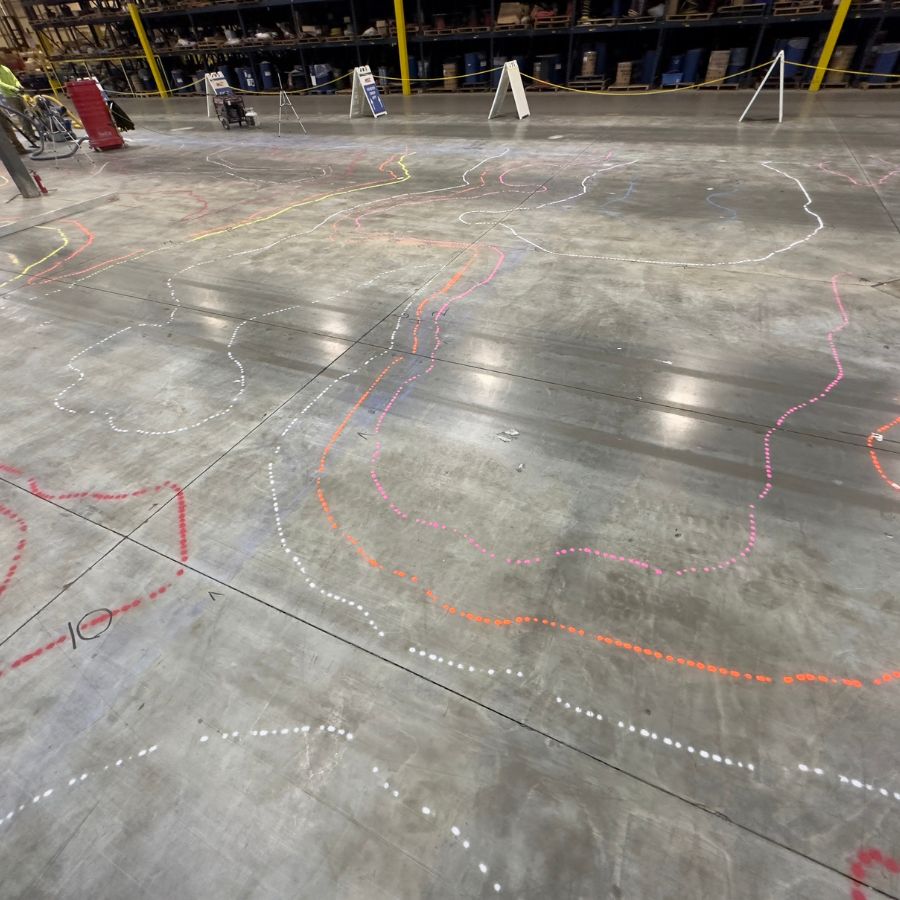
Durable began with laser scanning to map the elevation changes across each automation footprint.
The resulting data allowed the team to visualize the contours of the existing slab and pinpoint the areas requiring correction. Color-coded contour markings were transferred into the work area, giving both MSC and Durable’s field crews a clear visual representation of where the most significant deviations occurred.
The mapping also revealed a pattern: many of the problem areas followed slab intersections and joints where curling had occurred over time.
Rather than broadly grinding the entire floor, Durable used the testing data to target the areas that actually required correction.
As remediation progressed, the team continued evaluating the slab. Once the primary corrections were complete, Durable used profilograph testing on a grid established according to the AutoStore requirements to verify the finished floor.
The Solution
Different Floors Required Different Corrections
The two facilities presented different conditions, requiring Durable to develop a remediation strategy for each site.
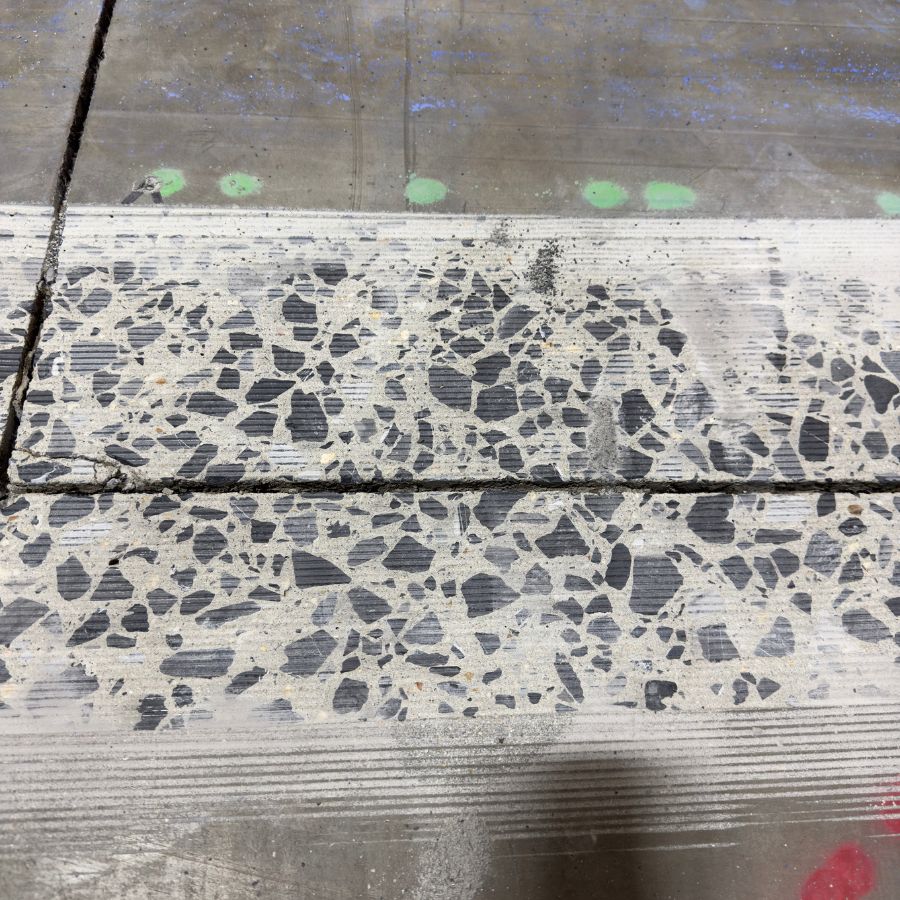
At Jonestown, correcting high areas required substantial concrete removal. Durable used a combination of shaving, milling and grinding to bring the slab into tolerance.
Removing that much material also created another consideration: the corrected areas could not simply end at an abrupt elevation change. Durable extended the grinding beyond the most severe high points to create smoother transitions and avoid introducing new operational or safety concerns.
At Elkhart, the challenge was primarily low areas rather than excessive high points. In some locations, Durable needed to add as much as 14 millimeters of material to bring the slab to the required elevation. The team selected a specialized high-performance topping material capable of supporting the demands of the automation system without creating future dusting or durability problems.
After the fundamental remediation work was completed, the floors were scanned and tested again to confirm that the required tolerances had been achieved.
Working Inside Active Facilities
Both projects were completed while MSC continued operating its facilities.
At Jonestown, the automation footprint was located near the center of the building, creating significant logistical challenges for power, equipment movement and dust control. Durable routed temporary power overhead rather than running 250 feet of 480-volt cables through active work areas.
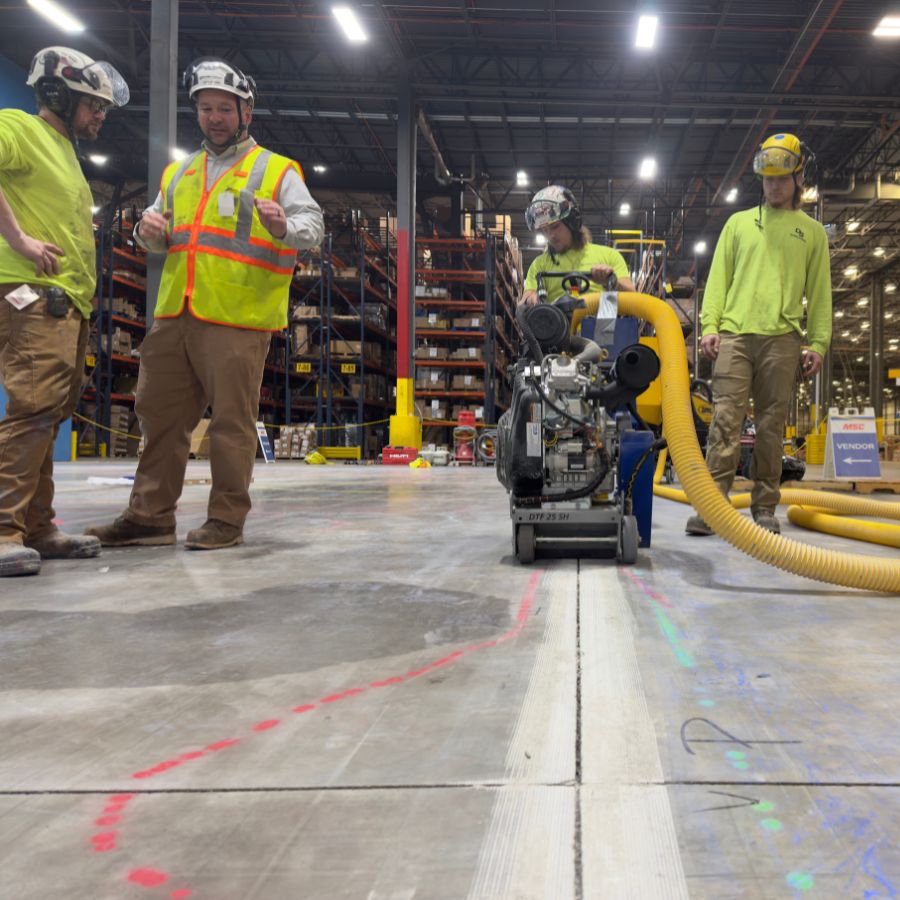
Crews also used propane-powered grinding equipment where appropriate, HEPA-filtered vacuum systems, and extensive housekeeping procedures to keep dust and debris to an absolute minimum. A Tenant floor scrubber was used alongside the grinding operation to continually clean the surrounding work area.
Elkhart presented its own access challenges, with the project located toward the back of the facility and away from convenient equipment access.
In both locations, the objective was the same: complete highly technical concrete remediation without allowing the work itself to become an obstacle to MSC’s ongoing operation.
Safety that Stands Up
Safety is a core value at Durable Surfaces, supported by trained leaders at both the corporate and job-site levels.
Because both MSC facilities remained operational during remediation, the project required careful management of power, equipment, dust and interaction with facility personnel. Durable used HEPA-filtered vacuum systems, continuous carbon-monoxide monitoring, and overhead power distribution to control job-site hazards while minimizing the impact on MSC’s employees and operations.
The work was planned around the facility—not the other way around.
The Results
Planned Remediation. Successful Go-Live.
Durable completed the Jonestown project in approximately six weeks and the Elkhart project in approximately four weeks, with work at the two locations occurring simultaneously.
Both floors were brought within the required tolerances, allowing the AutoStore installations to move forward as planned.
There were no callbacks related to the remediation, and both automation systems successfully went live on schedule.
Just as importantly, the floor work remained within MSC’s planned capital expenditure. Because the client had investigated the slab early and incorporated remediation into its project planning, Durable was able to provide a cost-effective solution rather than relying on overtime, rush mobilization or other costly measures to recover a schedule already in trouble.
Value Beyond the Automation Project
The MSC relationship did not begin—or end—with these AutoStore installations.
Having worked together for years, MSC already knew Durable as a trusted resource for its concrete floors. That relationship gave MSC confidence to involve Durable before the automation equipment arrived and rely on the team to determine what the existing slabs needed.
Durable continues to support MSC with ongoing facility repair, including quarterly building diagnostics and repairs in areas beginning to show deterioration.
The result is a different approach to concrete maintenance: identifying problems before they become operational emergencies and making informed decisions about when and how to address them.
“For more than 10 years, Durable Surfaces has been a trusted partner and preferred vendor for concrete repairs and restorations for MSC.
“Durable Surfaces recently supported MSC to meet very tight warehouse floor tolerances required for an automated goods-to-person solution in two locations simultaneously. The existing warehouse floor was more than 25 years old and didn’t meet advanced requirements now needed for automated systems.
“Durable Surfaces did tremendous work meeting the tolerance requirements and was able to complete the job during normal business hours without causing disruption to our business.”
The Lesson: Treat the Floor as Part of the Automation Plan
The most important part of these projects may be what didn’t happen.
There was no last-minute discovery that the floor was out of tolerance. No emergency remediation after automation equipment arrived. No scramble to find additional budget. No need to dismantle an installed system because the slab beneath it could not support proper operation.
MSC understood that the floor was a legitimate project risk and investigated it early.
That gave the project team time to test the slab, understand the extent of remediation, establish a realistic budget and schedule the work correctly.
For companies planning automation in an existing facility, that is the model to follow: test first, understand the floor you have, and build any necessary remediation into the automation plan.
Planning a Warehouse Automation Project?
Bring the floor into the conversation before installation begins.
Durable Surfaces evaluates existing slab conditions, identifies compliance gaps and develops targeted remediation plans to help automation systems perform as intended.
Frequently Asked Questions
Why should an existing warehouse floor be tested before installing automation?
Existing slabs were often designed and constructed long before modern automation systems were contemplated. Concrete testing can identify elevation changes, joint conditions and other deficiencies that may interfere with installation or system performance while there is still time to address them.
What happens if a floor does not meet an automation system’s tolerances?
The required remediation depends on the condition of the slab. High areas may be shaved, milled or ground, while low areas may require specialized topping materials. The goal is to correct the specific deficiencies identified through testing rather than unnecessarily treating the entire floor.
Can severely uneven concrete floors be corrected for AutoStore?
In many cases, yes. On MSC’s projects, Durable corrected deviations of up to 40 millimeters at one facility and more than 20 millimeters at another using a combination of concrete removal, grinding and specialized topping materials.
Can automation floor remediation be completed while a warehouse remains operational?
Yes, but it requires careful planning. Durable completed both MSC projects in active facilities using strategies including overhead temporary power, HEPA-filtered vacuum systems, carbon-monoxide monitoring and ongoing cleaning to minimize disruption to facility operations.
Lasting
Partnerships
With 80% of our client base being repeat customers, we hold partnerships at a high value.
Affordable &
Cost Effective
Invest in low-cost solutions with Durable Surfaces and avoid high costs in the future.
Proven
Expertise
Since being established in 2001, we have become experts in concrete & are known as the #1 consultant in the industry.
Best In-Class
Quality
Our innovative techniques, ideas and technology put us ahead of the competition.
Experience the Durable Difference.

We Make Your Floors Perform
