
Narrow aisle forklifts shaking violently between the racks. Rack strikes by the mast. Operators complaining about fatigue before lunch. Maintenance tickets piling up for wheel replacements and mast bearing repairs.
If any of this sounds familiar, the problem might not be your equipment at all. It might be the floor underneath it.
Fmin floor tolerance issues are one of the most overlooked causes of operational inefficiency in very narrow aisle (VNA) warehouses. The good news: once you understand what’s happening beneath those wheels, you can fix it.
Durable Surfaces helps facilities diagnose and correct floor defects that compromise VNA performance, restoring the smooth, level surface your automation and material handling systems require.
This guide walks you through what Fmin testing measures, why your floor might be failing, and the repair strategies that actually work.
Not sure whether your floor meets Fmin requirements? Schedule a floor assessment with our technical team.
Key Takeaways: How to Fix Fmin Floor Tolerance Issues in Warehouses
• Fmin testing measures five surface variables that directly affect how VNA lift trucks move, tilt, and vibrate within defined wheel paths.
• Forklift vibration in narrow aisles often stems from floor defects, not equipment problems—addressing the root cause saves on repairs.
• Precision concrete grinding removes high spots and restores flatness without requiring full slab replacement in most cases.
• Durable Surfaces specializes in Fmin floor testing and targeted repairs that minimize operational disruption in active warehouses.
• Testing early and maintaining floor tolerances prevents costly equipment damage and keeps VNA operations running at full speed.
What Is Fmin and Why Does It Matter for Narrow Aisle Operations?
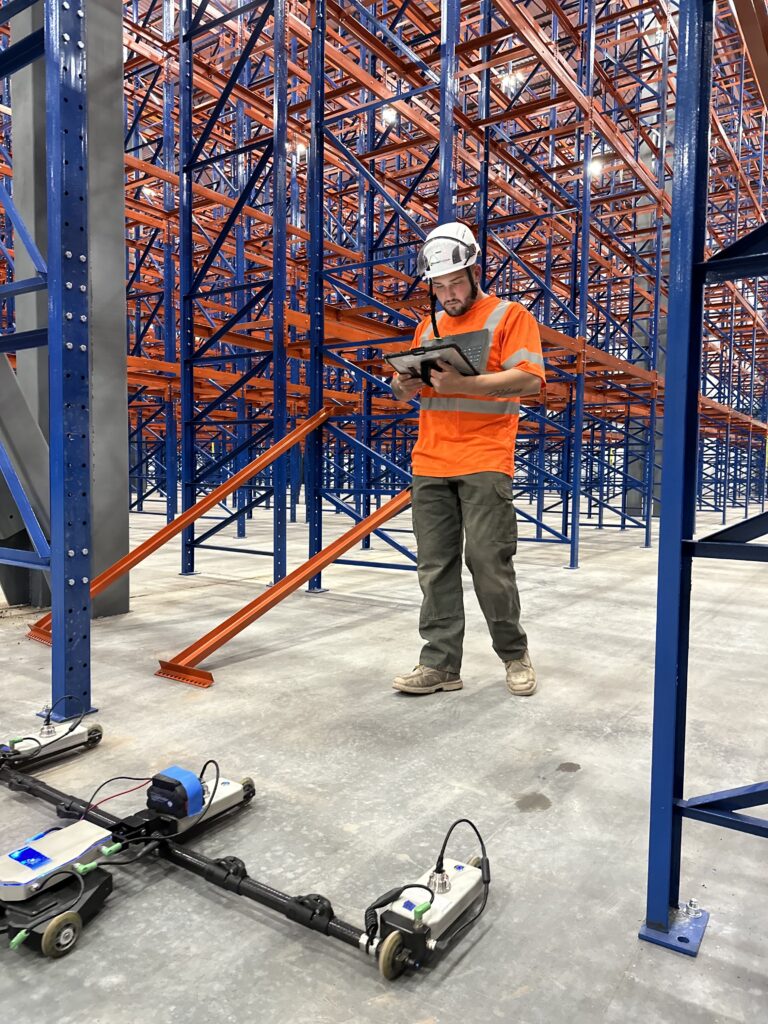
Fmin is a floor tolerance specification developed specifically for defined traffic areas where wire-guided or rail-guided lift trucks operate. Unlike standard FF/FL measurements that assess overall floor flatness and levelness across random traffic zones, Fmin focuses on the exact wheel paths your VNA equipment travels every single day.
The system measures five surface variables that control how a hard-axle vehicle moves:
-
Transverse elevation
-
Longitudinal elevation
-
Transverse rate of change
-
Longitudinal rate of change
-
Q Values
When any of these variables exceed tolerance, your forklift experiences the vibration, sway, and instability that operators feel immediately.
How Fmin Differs from FF/FL Testing
Standard ASTM E1155 FF/FL testing works well for areas where forklifts move freely in any direction. These measurements capture overall floor quality across a grid pattern. Fmin takes a different approach—it evaluates the specific wheel tracks within each aisle exactly where your equipment runs.
A floor might achieve acceptable FF 50 overall while hiding localized defects within a VNA aisle that drop the Fmin value below operational requirements. That’s why facilities running turret trucks at heights of 30 feet or more need defined traffic testing, not just random traffic measurements.
What Causes Fmin Floor Tolerance Problems?
Floor defects that show up as Fmin failures rarely happen overnight. Most develop gradually through a combination of original construction issues, operational wear, and environmental factors. Understanding these causes helps you prevent future problems and target repairs effectively.
Construction and Installation Defects
Many Fmin tolerance issues trace back to the day the slab was poured. If the concrete crew added too much water on site, the surface strength suffers. Premature or delayed finishing creates weak spots that wear unevenly under repeated traffic. Improper joint spacing leads to slab curl at the edges—and in VNA operations, those curled edges sit right where your wheel tracks need to be flat.
Inadequate subgrade preparation compounds these problems. A poorly compacted base allows differential settlement over time, creating dips and waves that throw your Fmin values out of tolerance even if the surface started flat.
Operational Wear and Loading
VNA lift trucks place concentrated loads on narrow wheel paths, thousands of times per day. Over years of operation, this repetitive stress accelerates surface wear in the exact locations that need to stay flattest. Joint edges deteriorate and spall. High spots develop where traffic patterns concentrate turning movements.
Heavy loads also contribute to structural movement. If your facility increased storage density or added heavier equipment without evaluating floor capacity, the slab may have settled unevenly beneath the highest-traffic zones.
Environmental Factors
Temperature fluctuations cause concrete to expand and contract, stressing joints and creating minor elevation changes that accumulate over time. Moisture migration through the slab can weaken the surface layer, leading to dusting and erosion that affect ride quality. In facilities with loading docks or exterior exposures, freeze-thaw cycling adds another layer of degradation.
How Fmin Floor Testing Works
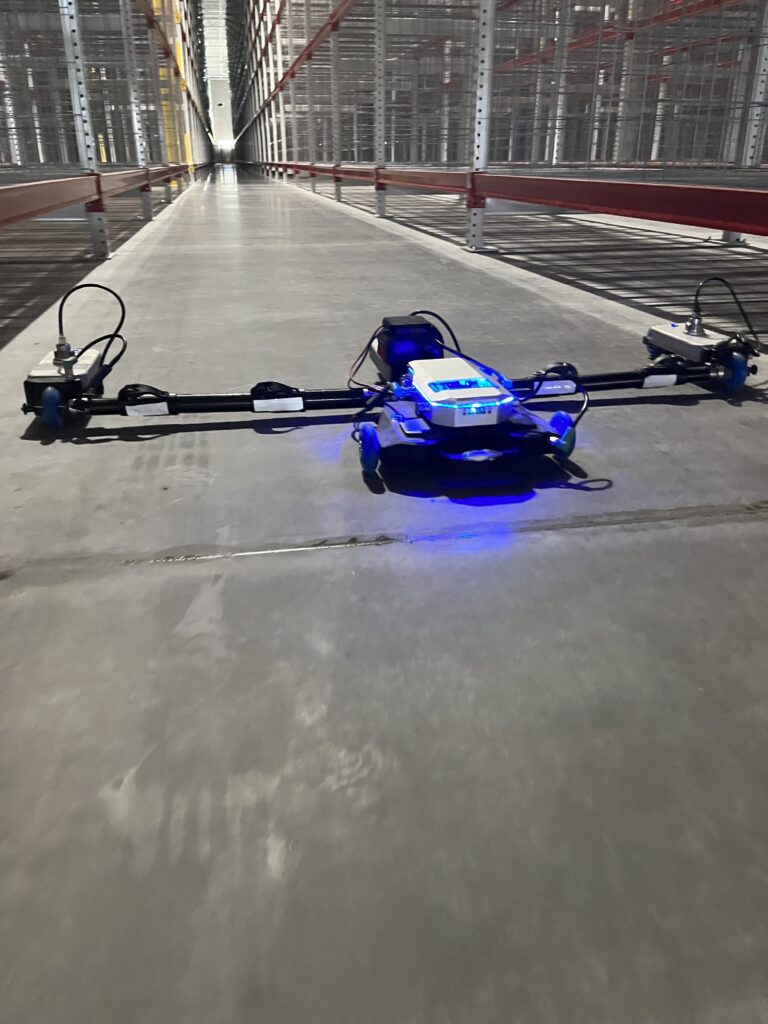
Fmin testing uses specialized equipment to measure the actual wheel track profiles your VNA equipment travels. The process captures elevation data at close intervals along each defined path, then analyzes how those profiles would affect a vehicle with your specific wheel configuration.
The Testing Process
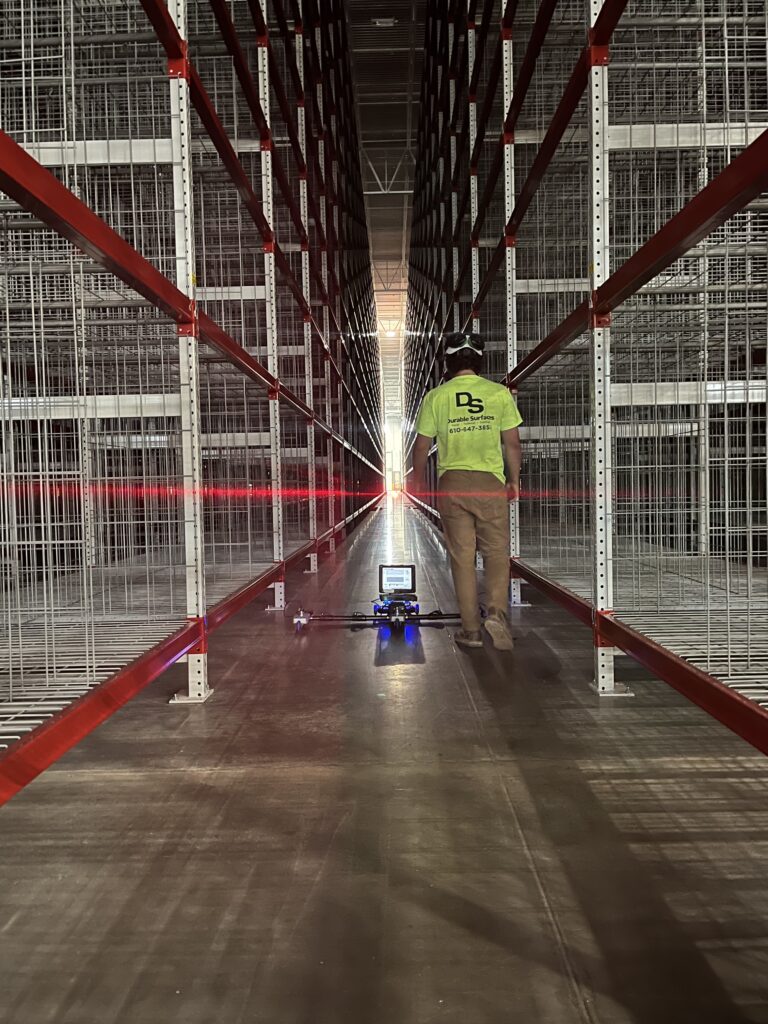
A floor profiler—typically a D-Meter or similar instrument—is walked up and down each future wheel track in a fixed pattern. The device records elevation changes every 12 inches, creating a complete vertical profile of the path. This data gets analyzed through proprietary software that simulates how a hard-axle vehicle would respond to those surface variations.
The analysis produces Fmin values for each aisle, identifying exactly where the floor exceeds tolerance and by how much. It also calculates the minimum grinding depth required at each location to bring the wheel tracks into full compliance.
When to Test
For new construction, Fmin testing should happen 28 days (or as long as the project schedule can allow) for the concrete to settle into its final location.
For existing facilities, testing should be completed before installing new VNA racking, before commissioning automation systems, or whenever existing automation systems slow/experience breakdowns or operators report increased vibration.
Understanding Your Fmin Test Results
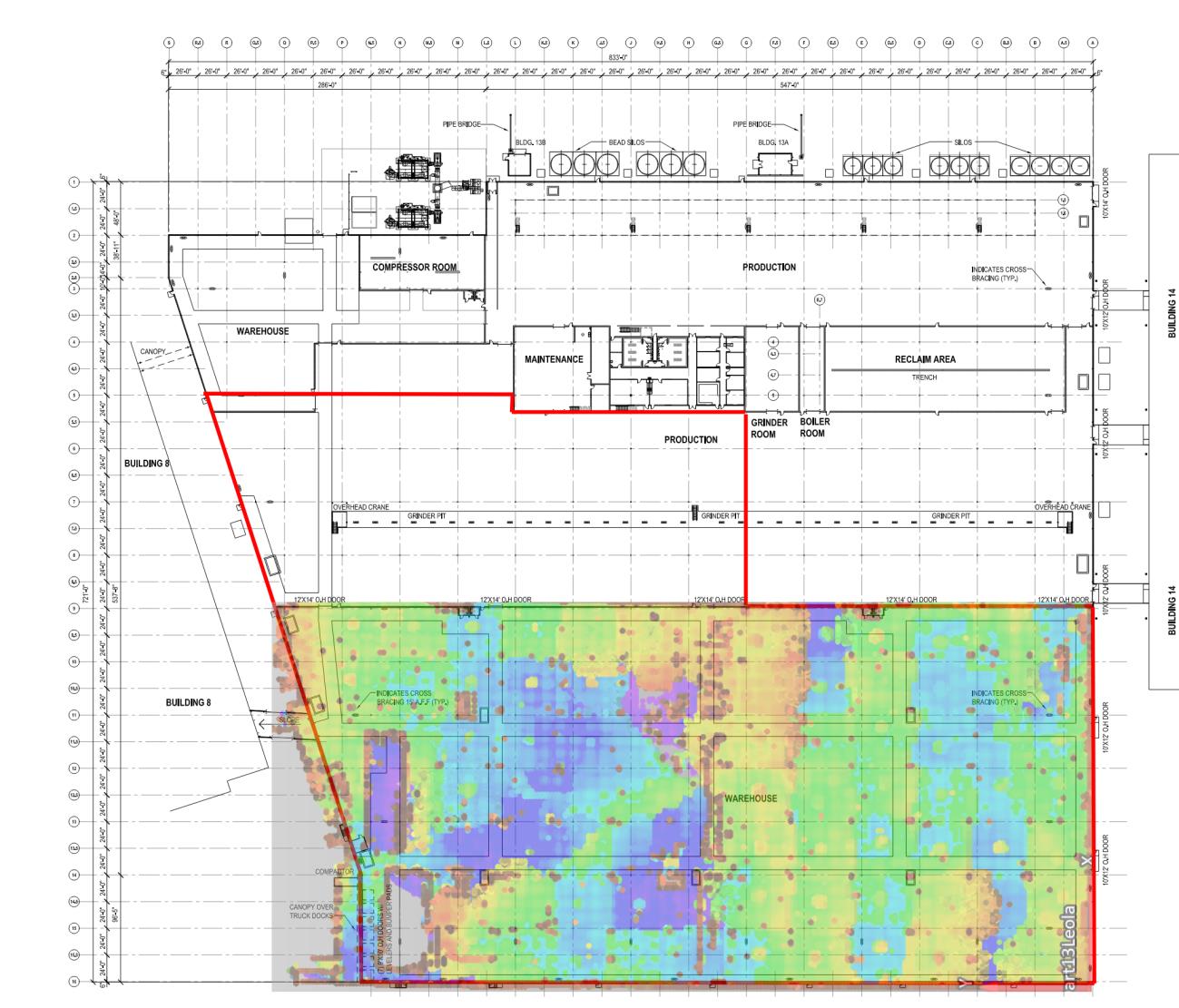
Your Fmin report will show tolerance values for each aisle tested, mapped against the requirements for your specific equipment and lift height. Higher Fmin numbers indicate tighter tolerances—a floor specified for Fmin 100 needs to be significantly flatter than one rated for Fmin 50.
Interpreting the Numbers
Equipment manufacturers specify minimum Fmin requirements based on lift height and operating speed. A turret truck operating at 40 feet needs stricter tolerances than one limited to 25 feet. That’s because small floor variations translate into significant mast sway at greater heights—what feels like a minor bump at ground level becomes a dangerous oscillation when you’re placing pallets near the ceiling.
Your test report will flag any sections that fall below the required threshold. Pay attention to the pattern of failures. Isolated high points suggest localized grinding will solve the problem. Widespread deficiencies across multiple aisles may indicate systemic issues with the original slab or subgrade.
Correlating Test Data with Operational Issues
Compare your Fmin results against maintenance records and operator feedback. Aisles with the lowest Fmin values typically generate the most complaints about vibration and the highest rates of wheel and bearing replacement. This correlation helps prioritize which aisles need immediate attention versus which can wait for scheduled maintenance windows.
Precision Grinding: The Primary Repair Method
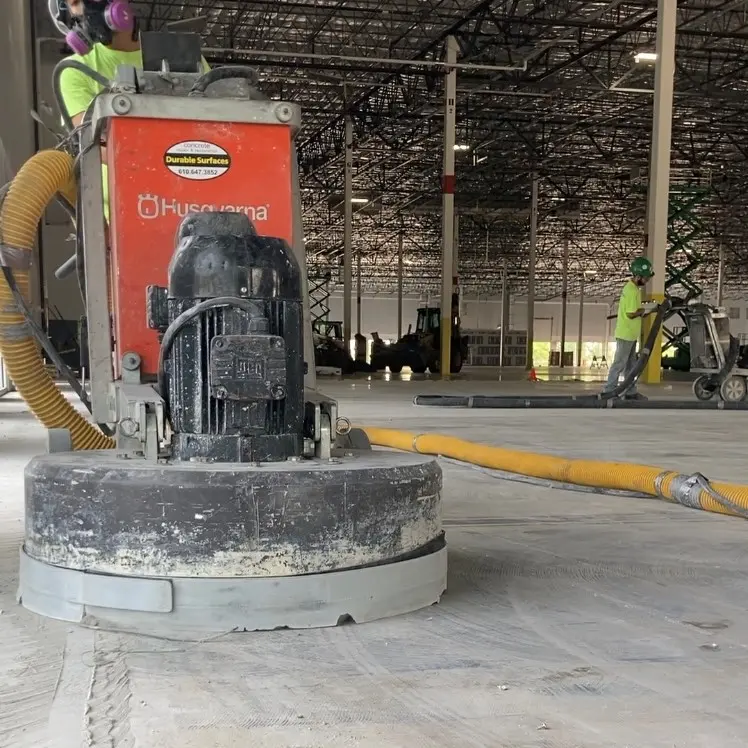
When Fmin testing reveals out-of-tolerance conditions, precision concrete grinding is the most common and cost-effective repair approach. Unlike full slab replacement, grinding removes only the material necessary to restore flatness—typically a few millimeters at high spots.
 How Precision Grinding Works
Diamond grinding equipment removes concrete from elevated areas while leaving the surrounding surface intact. The process grinds the floor into the required Fmin tolerance.
Skilled operators follow the grinding optimization data from your Fmin analysis, targeting exactly where material needs to come off and how much.
Durable Surfaces approaches grinding as precision work, not just surface removal. The goal is achieving the specified Fmin tolerance with the minimum material removal necessary. Over-grinding wastes time and money while potentially weakening the slab surface.
What Grinding Can and Cannot Fix
Grinding effectively addresses high spots, surface waviness, and joint curl that create ride roughness. It improves FF values and can bring Fmin tolerances into compliance when the underlying slab is structurally sound.
Grinding cannot raise low spots or correct levelness issues caused by slab settlement. If your floor has significant depressions or differential settlement between wheel tracks, additional remediation methods may be necessary.
Additional Repair Strategies for Fmin Deficiencies
Some floor tolerance problems require more than grinding alone. Depending on the nature and extent of deficiencies, your repair plan might include one or more of these approaches.
Self-Leveling Overlays
Self-leveling overlays require proper surface preparation, compatibility testing with the existing slab, and adequate curing time. When floor elevations are too low to correct through grinding alone, cementitious underlayments can be used to restore localized areas to the required elevation. These repairs are typically blended into the surrounding slab to create a smooth, continuous surface that meets floor tolerance requirements.
Joint Repair and Stabilization
Deteriorated joints often contribute to Fmin failures, especially where slab edges have curled or spalled. Joint repair involves removing damaged material, stabilizing the edges, and filling with semi-rigid epoxy or polyurea compounds that can handle repeated wheel traffic without breaking down.
Proper joint maintenance prevents the edge deterioration that throws wheel tracks out of tolerance. If your Fmin failures cluster at joint locations, prioritize joint repair before or alongside grinding.
Slab Stabilization
Floors that have settled due to subgrade issues may need void filling and slab stabilization before surface repairs make sense. Injecting grout or expanding foam beneath the slab can lift settled sections and fill voids that allow continued movement. Without addressing the underlying instability, surface repairs become temporary patches rather than lasting solutions.
Full Aisle Grinding
Full aisle grinding (also called whole aisle grinding) is a concrete floor preparation method that grinds the entire usable width of a narrow aisle, from rack foot to rack foot, to meet strict flatness and levelness specifications. This type of repair is commonly used in Very Narrow Aisle (VNA) warehouses, distribution centers, and other facilities where forklifts and automated systems operate in tight spaces.
Planning Your Floor Repair Project
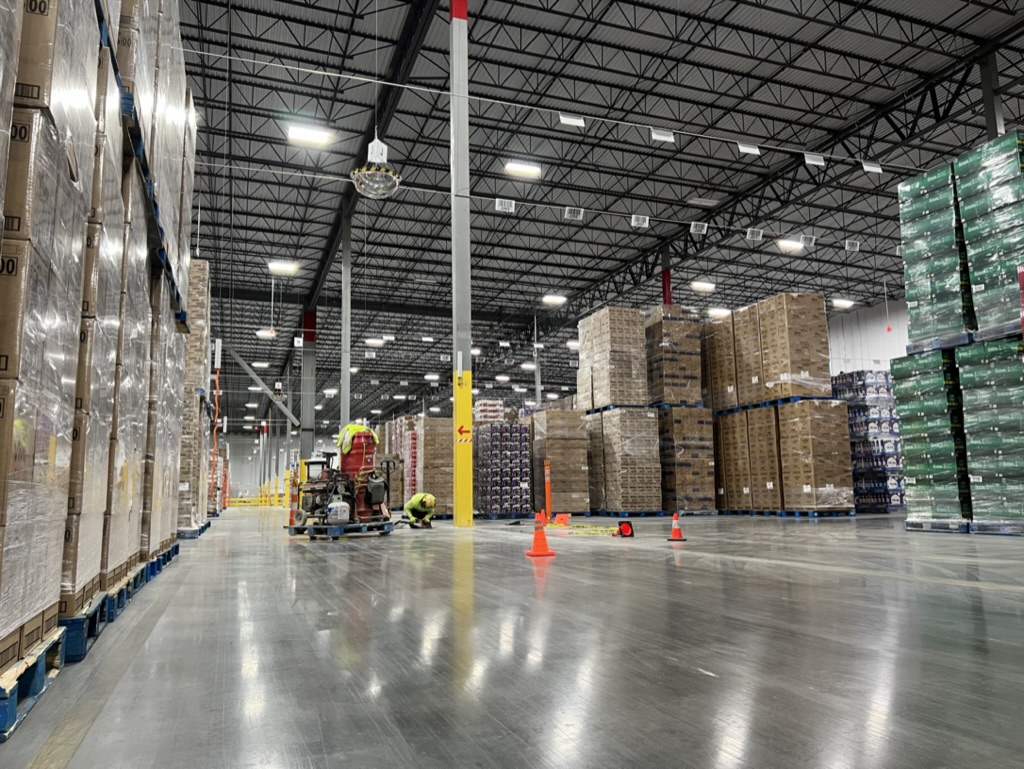
Successful Fmin floor repair requires careful planning around operational constraints. Most facilities cannot shut down an entire warehouse to fix floor tolerances. The key is developing a phased approach that addresses the most critical areas first while maintaining production.
Prioritizing Aisles and Zones
Start with the aisles showing the most severe Fmin deficiencies or generating the most operational complaints. If certain aisles handle higher-value inventory or support critical picking paths, prioritize those for early repair. This approach delivers measurable improvement quickly while leaving less critical zones for later phases.
Durable Surfaces works alongside facility teams to schedule repairs around production demands, including nights, weekends, and planned shutdowns. Many repairs can be completed in phases to reduce downtime and maintain operational continuity.
Coordinating with Equipment Schedules
Floor repair presents an opportunity to address equipment maintenance simultaneously. If grinding or overlay work will keep an aisle out of service for a shift, that’s also a good time to perform scheduled maintenance on the lift trucks that operate there. Coordinating equipment downtime with floor work maximizes the efficiency of both activities.
Preventing Future Fmin Tolerance Problems
Reactive repair addresses existing deficiencies, but proactive maintenance prevents many problems from developing. Building floor care into your regular facility maintenance program extends the interval between major repairs and protects your equipment investment.
Joint Maintenance
Keep joints filled with proper joint filler. Deteriorated filler allows debris and moisture into joints, accelerating edge breakdown. Inspect quarterly and rebuild joints as needed. Address any spalling or edge damage immediately before it worsens under continued traffic.
Operator Feedback
Your forklift operators experience floor conditions firsthand. Create a simple reporting mechanism for them to flag areas where vibration has increased or ride quality has degraded. This real-time feedback often identifies developing problems before scheduled testing would catch them.
In Conclusion: Restoring VNA Floor Performance Through Fmin Testing and Repair
Fmin floor tolerance issues don’t fix themselves—and the longer they persist, the more they cost in equipment damage, operator fatigue, and reduced throughput. The path forward starts with understanding what your floor is actually doing beneath those wheel tracks.
Testing provides the data. Precision grinding and targeted repairs provide the solution. And proactive maintenance keeps your floor performing long after the repair crews leave.
If your narrow aisle operations are suffering from vibration, increased maintenance, or equipment complaints, the floor is the first place to look. Durable Surfaces brings decades of experience in floor flatness testing, concrete repair, and industrial floor restoration to help facilities solve the problems that hold back safety, speed, and automation performance.
Ready to evaluate your floor’s Fmin tolerance? Contact Durable Surfaces to schedule an assessment and discover how targeted repairs can restore your warehouse floor performance.

Frequently Asked Questions About Fmin Floor Tolerance
What is Fmin floor testing?
Why do my narrow aisle forklifts vibrate so much?
Can an existing warehouse floor be repaired to meet Fmin specifications?
How often should warehouse floors be tested for Fmin tolerance?
We recommend that Fmin surveys be completed at the following times:
- 28 days (if possible) after new concrete is poured
- Before an automation system is installed
- Before VNA rack is installed or during the due dilligence period
- When automation systems are slowing/experiencing breakdowns
- Operators report increased vibration
