
Prepared by: Derek Cressman, President and Partner at Durable Surfaces
In industrial and distribution environments, concrete floors are the foundation of every operation. When they begin to fail, the consequences extend far beyond the surface.
Concrete rarely fails in a dramatic, obvious way. Instead, small issues develop gradually: a cracked joint here, uneven wear there, a patch that doesn’t quite hold. Individually, these problems seem manageable. Collectively, they can create serious operational, safety, and financial consequences.
For facility owners, operators, and managers in industrial and distribution environments, these issues often go unnoticed until they begin impacting safety, throughput, and equipment reliability.
This article explores what a “failed floor” really means and how the cost escalates over time if issues are left unaddressed.
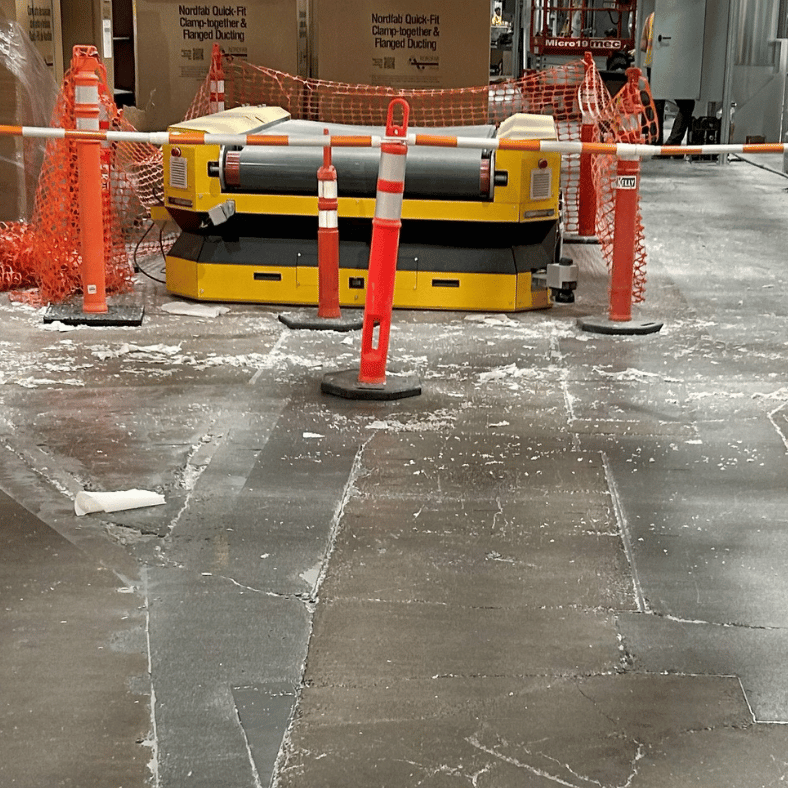
Expensive robotic system is out of commission because of the condition of the floor.
What Does a “Failed Concrete Floor” Really Mean?
A concrete floor hasn’t failed only when operations shut down or when the floor collapses. In most industrial or distribution environments, failure happens much earlier.
An industrial floor has effectively failed when it no longer supports safe, efficient, and predictable work.
That failure often shows up operationally first. Pick rates slow down. Operators complain about fatigue or joint pain. Forklift tires, wiring, and sensors become damaged due to vibration. Product damage increases. Maintenance teams find themselves fixing the same areas over and over again.
How Concrete Floor Failures Start
Most failing concrete floors share common characteristics. Cracked or deteriorated joints are among the most frequent issues, especially when joints were never properly filled or maintained. Over time, traffic breaks down joint edges, creating uneven travel paths that affect forklifts, pedestrians, and automated systems alike.
Surface wear is another early indicator. As concrete wears down in high-traffic zones, dusting increases and traction decreases. Facilities often respond with quick fixes, such as patching, grinding a small area, or applying a coating that isn’t suited for the environment.
Unfortunately, those repairs rarely last.
“Oftentimes, maintenance teams are doing the best they can with the tools they have,” says Jeremiah Dyer, General Superintendent at Durable Surfaces. “But if you’re patching the same joint every two or three months, that’s not a repair strategy. It’s a warning sign.”
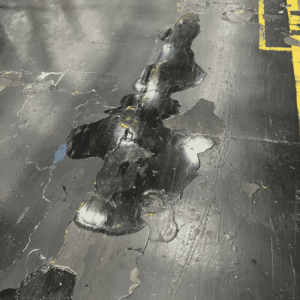
Patched area of concrete showing visible wear and damage. This type of damage can cause automation systems to fail over time.
The Hidden Costs Most Facilities Don’t See
Maintenance and Repair Costs Add Up Quietly
Reactive floor maintenance is expensive. It’s not always seen in a single invoice, but in worsening disruption of operations over time. Lift truck damage, wheel and hub damage, and lift truck maintenance costs increase. Emergency callouts cost more than planned repairs, and rushed timelines often increase labor and material expenses.
“What surprises owners and managers is how much money they’ve already spent by the time we get there,” Derek Cressman, President and Partner at Durable Surfaces notes. “They don’t realize that all those small fixes over time can exceed the cost of doing the work right from the start.”
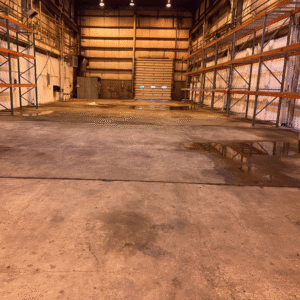
Damaged warehouse loading area shows visible deterioration and low spots where water accumulates.
Safety Risks Grow with Every Pass of a Forklift
As floors degrade, safety risks increase. Uneven slabs and poor repair practices contribute to trips, slips, and falls. Operators experience more vibration, leading to fatigue from excessive vibration, back injuries, and rolled ankles. In high-rack or VNA environments, slab irregularities can even contribute to rack strikes or instability.
In one facility, deteriorating concrete slabs had begun to rock and shift under forklift traffic. The issue was known, but repairs were repeatedly delayed because operations were able to “work around it.”
Tragically, that decision had irreversible consequences. An employee operating a forklift was killed when uneven slab movement caused racking to shift, sending thousands of pounds of inventory crashing down.
The incident led to an OSHA investigation, significant fines, lawsuits, and hundreds of thousands of dollars in unplanned repairs. More importantly, it resulted in the loss of a life in a situation that was entirely preventable.
This is an extreme example, but it underscores a critical reality: floors are not just an operational concern. They are a foundational safety system.
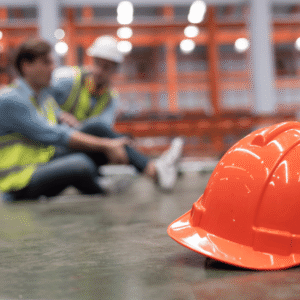
The condition of the floor has a direct impact on employee health and safety.
Employee Morale Suffers and Retention Challenges Worsen
Beyond injuries and operational inefficiencies, deteriorating floors can quietly erode employee morale. People notice when their work environment feels unsafe and neglected, and they work differently because of it.
As floors degrade, employees begin to accept poor conditions as normal. Small issues are more likely to be overlooked because the environment no longer signals that quality and safety are priorities.
“There’s a negative mentality that forms where employees may say, ‘Leadership doesn’t care, so why should I?’” says Dyer. “It creates a worsening cycle, and it can even contribute to hiring and retention challenges. A floor is the most-traveled surface in the building. If it’s failing, everyone feels it, whether they say it out loud or not.”
In tight labor markets, these conditions matter. Facilities that feel unsafe, worn down, or poorly maintained create hiring and retention problems. Conversely, investing in a safer, more reliable floor sends a clear message to employees: this is a place where people, performance, and pride in work matter.
Productivity Suffers Long Before Anyone Calls It Downtime
In many facilities, concrete floor conditions quietly place a cap on productivity long before leadership realizes why output has stalled.
When floors are compromised, operations typically adapt by slowing down. Forklifts reduce speed. Traffic routes change. Bottlenecks appear in areas that should flow freely. Automation systems throttle performance to compensate for inconsistent surfaces.
None of this shows up as a single shutdown event. Instead, productivity erodes gradually, making it harder to pinpoint the cause.
“By the time someone asks why throughput is down, the floor has often been part of the problem for a long time,” Cressman explains.
Equipment, Automation, and Inventory Take the Hit
Modern facilities rely heavily on equipment and, increasingly, on automation. Forklifts experience accelerated wear on tires and suspension systems. AGVs and AMRs misread sensors or struggle with navigation.
Robotic crashes are often a clear signal that the floor is under performing. If robotic systems carrying material strike each other, the material is removed and no longer able to be sold. Over the course of the year, wasted inventory expense adds up to significant losses.
It’s common to point the finger at the system when the floor is the real culprit.
“We see automation systems blamed all the time,” says Cressman. “But if the floor wasn’t evaluated or prepared to spec, the system never had a fair chance to perform. A multi-million-dollar automation investment is only as reliable as the slab beneath it.”
How Costs Escalate Over Time
| Timeframe | Year One “It’s manageable.” |
Year Two “Why is this getting so expensive?” |
Year 3 “We should have done this sooner.” |
|---|---|---|---|
| Failure Characteristics |
|
|
|
| Risk | Operational drag becomes normalized. Inefficiency becomes part of daily operations. | The floor is dictating operational decisions instead of supporting them. | Waiting didn’t save money. It multiplied the risk. |
A Smarter Approach: Planning for Floor Performance
Facilities that avoid costly floor failures don’t wait for problems to become emergencies. They treat the concrete slab as critical infrastructure—planned, evaluated, and maintained just like electrical systems, plumbing, or network connectivity.
A smarter approach focuses on four practical steps to move from reactive fixes to intentional, performance-driven planning.
1) Start with Visibility, Not Assumptions
Before reacting to surface damage or complaints, high-performing facilities evaluate how the floor is supporting operations today.
That includes:
- Traffic patterns and equipment loads
- Automation and material-handling requirements
- Safety expectations and employee feedback
Many floors fall out of alignment with operations long before failure is obvious.
2) Repair Before You Replace
Replacement is not always the answer—and often not the best one. In many cases, targeted repairs, joint stabilization, surface treatments, or technical remediation can restore performance. The key is addressing root causes, not just patching symptoms.
3) Move from Reactive to Planned Maintenance
Emergency repairs are expensive and disruptive. Planned intervention gives facilities control.
A proactive strategy includes:
- Scheduled repairs instead of crisis response
- Preventative maintenance in high-traffic areas
- Annual planning and predictable budgeting
This approach reduces downtime and extends the life of the slab.
Include the Floor in Every Major Change
Any operational shift, especially automation, should start with the floor.
New systems place tighter demands on:
- Flatness and consistency
- Load tolerance
- Long-term durability
“Fixing the floor before installing new systems is always easier, faster, and cheaper than fixing it afterward,” Cressman says. “It’s one of the most preventable mistakes we see.”
Final Thoughts for Facility Leaders
Floor failure doesn’t happen all at once, but its impact grows exponentially over time. Small issues compound across safety, productivity, and cost. The most expensive repairs are almost always the ones done too late.
Waiting often feels like the least disruptive option—but in reality, it’s usually the most expensive one. If you’re wondering what to do next, start here:
Ask the Right Questions
- Are we repairing the same floor areas repeatedly?
- Have operations, equipment, or traffic patterns changed since the floor was last evaluated?
- Are safety complaints, fatigue, or equipment wear increasing?
- Do we know how our floor condition is affecting productivity or automation performance?
- Can our current floor condition support a system upgrade?
If the answer to any of these is yes, it’s time to take a closer look and bring in an experienced concrete specialist like Durable Surfaces.
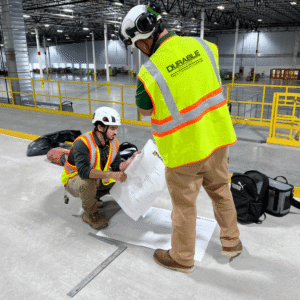
Durable Surfaces brings a high level of expertise, safety, and quality to every job.
Why Choose Durable Surfaces?
Durable Surfaces is the concrete authority for industrial and distribution facilities that depend on performance.
With decades of experience and expertise across more than 70 scopes of work, our team understands how floors impact real-world operations. We bring unmatched expertise for concrete repair and restoration, coatings, and technical solutions.
We believe in forming long-term partnerships, not one-off fixes. We work alongside facility teams to plan repairs around live operations, support preventative maintenance strategies, and help organizations improve both operational efficiency and safety standards over time.
Whether you’re maintaining an aging slab, preparing for automation, or dealing with recurring repair failures, Durable Surfaces brings the insight, experience, and execution to make your floors perform.
Call 610-647-3852 or Contact Us today for a free, no-obligation on-site evaluation. We’ll show you where your floors are holding you back and how Durable Surfaces can help you move forward.
Durable Surfaces | We Make Your Floors Perform
